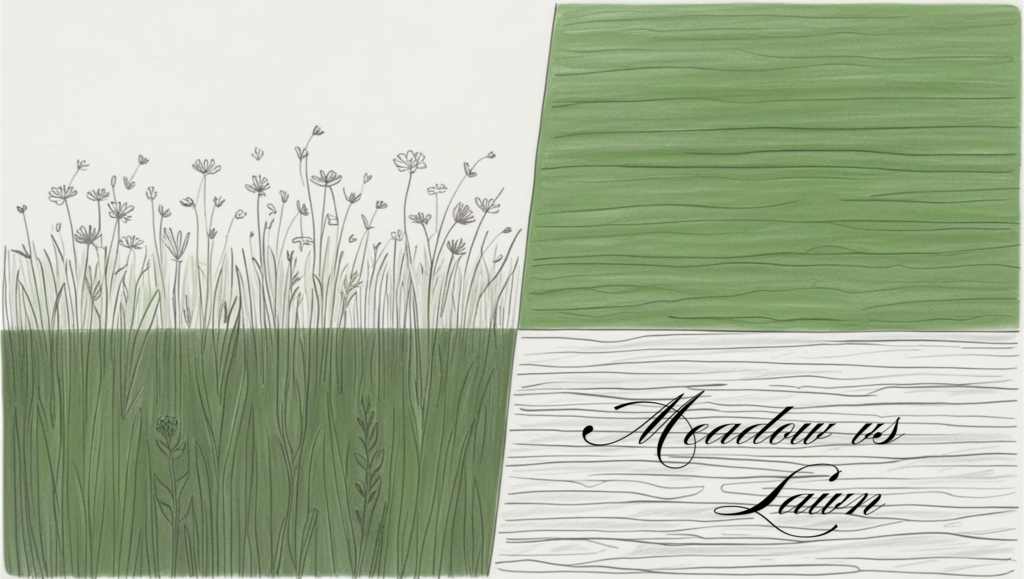

Lawns are highly favoured in America, colonising more land than the country’s most widely grown crop—corn. However, unlike crops, lawns do not provide any food or practical benefits. Instead, they function as a status symbol, reflecting their owners’ perceived success and helping reassure them of their achievements.
A few years ago, we relocated to Ireland, eager to learn about the culture and landscapes of this beautiful country. I envisioned the homes and gardens of the Irish as vibrant expressions of their rich heritage—perhaps charming cottages with colourful flower beds and Ivy climbing up their walls. To my surprise—and a hint of disappointment—I found that most residences, whether quaint private houses or modern townhouses, featured meticulously manicured lawns that mirrored the best practices of American landscaping. Instead of the lush, eclectic gardens I had expected, I rarely stumbled upon floral displays or whimsical outdoor spaces. The overwhelming uniformity of the lawns, perfectly trimmed and devoid of diverse plant life, seemed to dim the enchanting beauty I had hoped to discover in Ireland’s outdoor scenes.
I’ve heard from local people that some twenty years ago, it was common for people in Ireland to grow vegetables in their back gardens. However, with the rapid economic growth known as the “Celtic Tiger,” a shift in mindset occurred. Like in America, consumerist values took precedence, and the ideal of the “perfect American backyard” became the norm. It’s unfortunate. I often feel sad seeing these vast, neatly trimmed lawns and thinking about the vibrant, beneficial greenery that could flourish in their place.
Even this situation is more complicated than it appears. My friend, who has a small front garden, shares how challenging it can be to stand out in her community. Differences, even minor ones, can create friction among neighbours and lead to issues. For example, after a neighbour complained to the council, she had to remove a charming little wooden shed that she used for storing her bicycle and tools, replacing it with something far less appealing. She also considered adding a compost pit, but concerns from her neighbours caused her to abandon that idea.
I once overheard a man comment in the grocery shop, “Spring is here—time to mow the lawn.” This sparked a discussion in which someone else attempted to explain that lawns are not as harmless as they might appear. The man agreed, acknowledging that they had initially decided not to mow their front yard last year. However, after seeing their neighbours’ freshly cut lawns, they instinctively grabbed the mower. It can be challenging to be the odd one out.