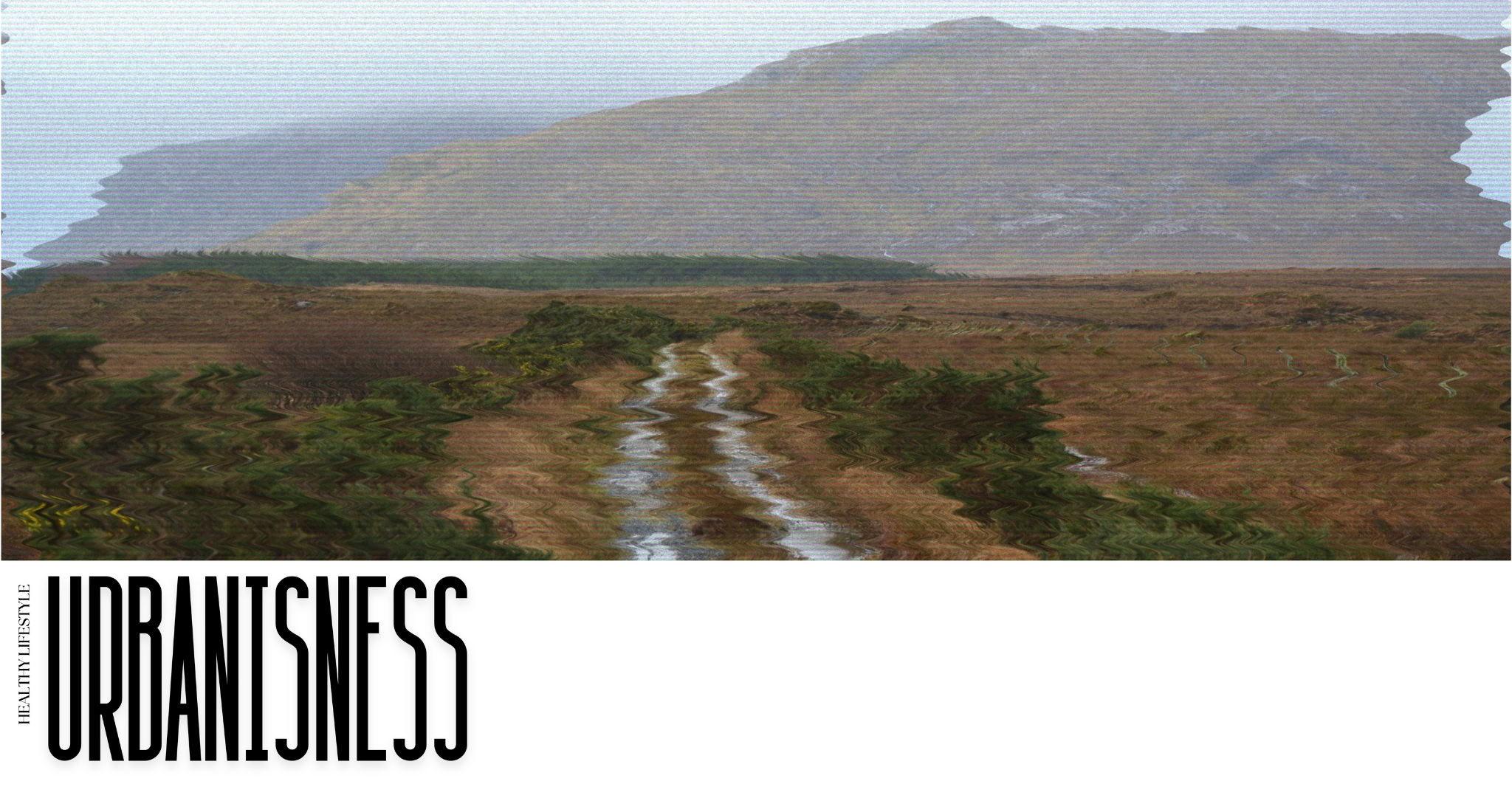


all the scenes are taken from the film “Rivers and Tides”
I hold dear the memories of a few years ago when my young son and I would spend long winter mornings on the picturesque beaches near our home in Northern Spain. The shorelines, breathtakingly beautiful and nearly deserted during the colder months, transformed into a treasure trove as storms swept through, depositing a remarkable array of objects—colourful plastic shards, weathered pieces of wood, and glistening metal fragments.
We would spend hours immersed in creative play, crafting whimsical sculptures from these found materials, pouring our imaginations into each piece, only to see them vanish with the tides by the next day. In those precious moments, time seemed to dissolve around us, slipping away unnoticed as we became lost in the rhythm of the waves and the beauty of our surroundings.
Something about being in nature—whether in a quiet forest or by the sea, away from crowds—allows us to pause, linger, and, at least for a while, feel like children again. I often return to my favourite film, Rivers and Tides. I watch it, share it with my children, and hope Goldsworthy’s work will plant a seed in their young hearts. Andy Goldsworthy is more than just an artist and sculptor; he is, above all, a philosopher of life.
As we mature, we all confront questions about our place in the world and the meaning of life. Goldsworthy suggests that genuine change cannot occur without first understanding where we belong. This means recognizing our calling, understanding our gifts, and, most importantly, accepting that we are part of nature, not its masters.
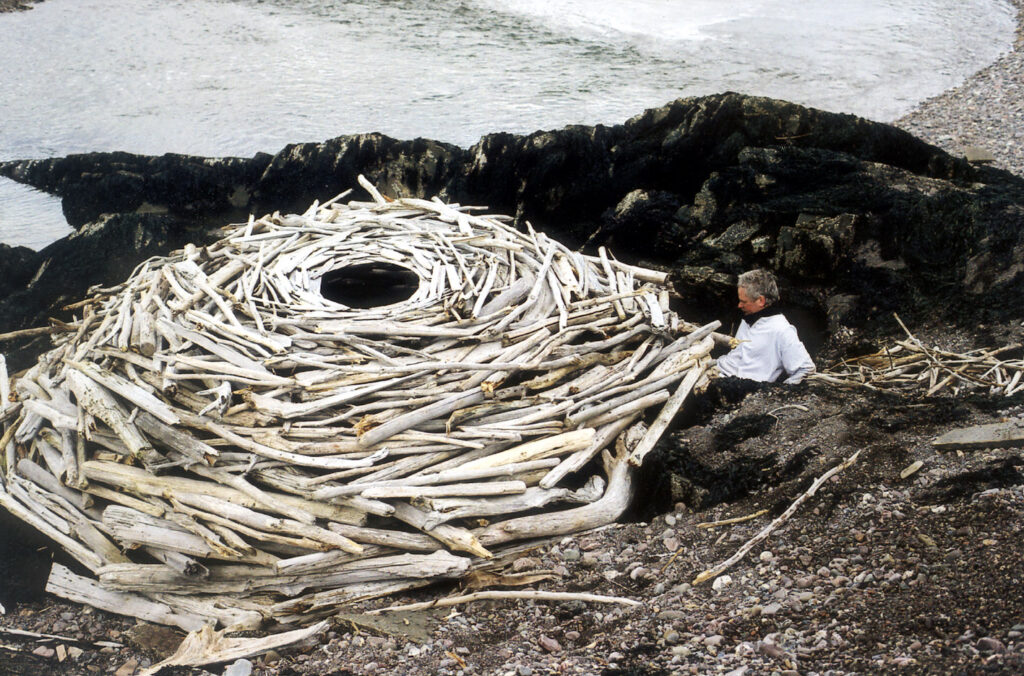
At the water’s edge, among the rocks, Andy constructs a massive igloo from driftwood collected along the shore. The tide is inescapable. In the centre, a dark, gaping hole forms the core of a swirling vortex, drawing in fragments of sea-worn wood—pale and skeletal, resembling ancient bones. He seeks to capture this place’s essence and the water’s perpetual motion.
Later, in another place, he attempts to build an egg-shaped sculpture using flat stones. Time and again, the structure collapses, but with each attempt, he manages to make more remarkable progress than before. This process reflects persistence and a growing understanding of the stone. The egg shape emerges as a symbol of protection, resembling a seed filled with life—a silent guardian of the landscape.
His fascination with the metaphor of rivers and streams re-emerges, this time manifested as rivers of sheep. He reflects on the green, patchwork landscapes where lambs graze endlessly. The absence of trees in these vast fields is not coincidental; rather, it is a direct result of the sheep shaping the land over centuries. He feels a pressing need to raise awareness of their impact, acknowledging how different our perception of sheep is from their true significance. We often see them as woolly creatures, but what lies beneath that wool? To capture their essence in a new way, he creates a striking installation—a river of white wool flowing along the contours of rocky walls in the Scottish pastures.
Goldsworthy, wearing his old rubber boots, gazes into the water of a mountain stream in Scotland. His hands, reddened from the cold, sift through the riverbed as he forages for stone ore. He experiments with colour, grinding the stone into a fine powder and tossing the mixture from a small waterfall, creating pools of crimson water. The red dust cascades down the cliffs and dissolves into the river, resulting in a fleeting yet vivid transformation. He compares the ore to the earth’s blood, viewing red as the essence of life itself. His pursuit of understanding this colour is relentless—he believes that by tracing its origins, he will unlock a deeper understanding of colour as a whole. For him, red is more than just a pigment; it represents energy—a force that flows through all things, including himself.
Andy celebrates the uniqueness of stones and trees, reflecting on the memories they hold and the events they have witnessed over time. Through the work, he encourages us to become aware of the beauty surrounding us—serenity we often overlook or take for granted. Like a spiritual guide, he invites us to rediscover our childlike wonderment, urging to see the world with renewed insight and a revived sense of connection.
No Comments